AI for leaders as a trusted AI layer inside the IS
Shadow AI, prompt leakage, unsanctioned tools: the real risk is not the model, it is the missing controlled layer in the information system.
The risk is no longer buying AI. It is letting it in without a control layer.
Business teams adopt assistants, agents, and connectors faster than security policies can keep up. Security and IT leaders know the pattern: personal SaaS accounts, sensitive data pasted into public chatbots, untracked scripts calling external APIs, audit trails that cannot be reconstructed.
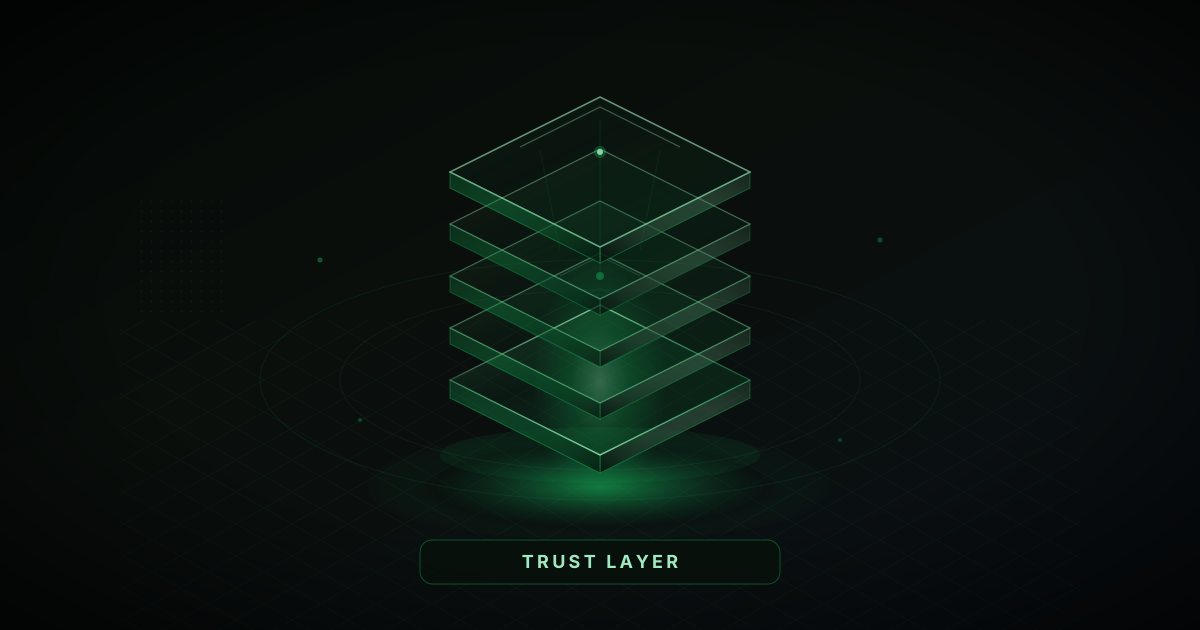
The problem is not “AI”. It is the lack of a trusted AI layer inside the information system. One governed, auditable entry point aligned with the IS perimeter, that replaces shadow AI instead of competing with yet another tool.
That is where AI for leaders sits. Not another chat, but the platform through which AI usage flows, with the same expectations as the rest of the IS: identity, network, data, logs.
One entry point
Policies, connectors, token budgets, and logs in one place: AI becomes an IS service again, not a pile of exceptions.
What “trusted layer” means in practice
A trusted layer is not a slogan. It is a set of controls IT can explain to a risk committee.
Identity and access. Who may invoke which model, on which sources, with which roles (business, L2, admin).
Data perimeter. Prompts, embeddings, caches, and logs stay in approved regions and operators. See also Data and AI: the sovereign perimeter.
Egress control. Outbound calls go through the gateway. No accidental uploads outside the zone.
Auditability. Who asked what, on which sources, with which answer. Exportable for accreditation and post-mortems.
Product governance. Agent and connector catalogues, budgets, and guardrails. Instead of PoCs that quietly become production.
These map to accountability under the GDPR and to security expectations from bodies such as ANSSI and the CNIL: know where data lives, who can reach it, and how to prove it.
Against shadow AI
A platform people use because it is safe and useful beats a ban that nobody follows.
Why bans alone fail against shadow AI
Banning ChatGPT or Copilot without a controlled alternative pushes teams to work around the policy. Risk becomes less visible, more fragmented, harder to audit. Frameworks such as the NIST AI Risk Management Framework stress continuous governance (inventory, measure, control), not blocking alone.
A trusted AI layer flips the equation. It becomes the easiest path for the business and the safest path for security. Connectors to internal systems, reusable policies, chosen models (including sovereign ones), usable traces. Usage stays inside the IS because that is where real work happens.
Under EU rules, the AI Act increases the need for documentation, traceability, and governance of higher-risk systems. One platform simplifies evidence. A constellation of personal tools makes it prohibitive. For the operational checklist, see EU AI Act: practical compliance.
Architecture: the platform as an IS service
In practice, AI for leaders plugs in like other critical building blocks. Authentication and roles rely on the IS SSO / IAM. Deployment is on-prem or in a sovereign cloud, with controlled egress. RAG and agents attach to already classified sources, with the same access controls. Logs and metrics export into the existing stack (SIEM, ticketing, GRC).
This is not AI beside the IS. It is AI inside the IS, with a clear operational contract: availability, degraded modes, prompt retention, connector review. The strategic frame matches Why sovereign AI matters: control of deployment, data, and accountability.
Once identity, egress, and audit are wired, every new agent or RAG use case inherits them. That is how large organisations scale AI without multiplying risk reviews, and without forcing security to reinvent the wheel for each PoC.
Conclusion
Enterprise AI security is no longer only about which model you pick. It is about whether a controlled layer exists inside the information system: governance, perimeter, audit, and real adoption against shadow AI.
AI for leaders is built to be that layer. One entry point, reusable policies, evidence ready for the committee. Business moves forward. Security keeps the reins. For the data perimeter, read Data and AI: the sovereign perimeter. For the regulatory frame, EU AI Act: practical compliance.
Keep reading
Why sovereign AI matters for enterprise
The chatbot is no longer the brief. Teams need a platform where data stays under their control.
By Florian Gabon · August 6, 2026
Data and AI: the sovereign perimeter
Where data lives, how it is encrypted, who can reconstruct a request: the perimeter that makes enterprise AI credible.
By Florian Gabon · July 23, 2026
EU AI Act: practical compliance for the enterprise
Risk classes, duties, evidence. What the AI Act changes once AI is actually in production.
By Florian Gabon · August 4, 2026