Why sovereign AI matters for enterprise
The chatbot is no longer the brief. Teams need a platform where data stays under their control.
The problem isn't the model
Model quality is rarely why an AI pilot dies. The blocker is simpler: nobody can say where the data went after the conversation hit an external SaaS. Prompts, attachments, DMS excerpts, customer tickets leave the perimeter without an audit trail that compliance or N2 support can actually use.
In regulated industries (finance, healthcare, the public sector), that opacity blocks production. The debate is no longer “which LLM wins a public benchmark?” It is “what operational control remains once the agent is wired into your systems?” That is the same control question behind the EU GDPR and the EU AI Act framework. Until it has a contractual and technical answer, every new use case reopens the security committee, timelines slip, and business teams drift back to ungoverned tools.
Sovereign AI addresses the control constraint first. Generation quality comes next, and it is measured on your corpus, under your policies, not on a generic leaderboard.
Sovereignty = operational control
Hosting, network perimeter, model choice, request traceability. Not a slide claim.
What “sovereign” must cover in practice
Sovereignty is not a cloud badge or a slide claim. It is an operable perimeter: where models run, where embeddings and context caches live, who can read prompts and answers, and how an auditor reconstructs a decision six months later. Without those points, every sprint reopens the accreditation file.
Teams that take AI to production lock three decisions before the first live agent:
- Residency: approved regions and operators for models, vector indexes, log retention, and backups. Embeddings are derived data: they often inherit the sensitivity of source documents.
- Identity: reuse existing IAM (SSO, groups, business roles), not a parallel directory nobody syncs. The agent must see what the user can already access, no more, no less.
- Traceability: who asked what, on which sources, with which tools called, which answer, which policy denial. Exportable for audit, incident response, or access requests.
Add egress control (which domains the cluster may reach), secrets in the internal KMS, and a documented degraded mode when the primary model or a critical connector is down.
Typical sovereign platform architecture
The gateway centralizes authentication, model routing, and data-source access. IT keeps a unified view of traffic: per-team token budgets, p95 latency, tool errors, policy denials. Business teams consume one interface; the platform carries governance.
This split avoids the classic trap: wire a SaaS copilot to SharePoint “to move fast,” then discover embeddings, logs, and sometimes attachments sit outside the contractual frame. A sovereign gateway reverses the order: control first, connectors second. RAG (IAM scopes, citations, reranking) and agents (scoped tools, human approvals) then roll out on the same foundation.
In practice, the most common incidents are not spectacular breaches. They are overly broad service accounts, indexes that mix public and confidential spaces, logs left in a too-open bucket, or a silent model fallback that leaves the approved zone. A sovereign architecture makes those drifts visible, and therefore fixable.
What changes for teams
For IT, on-prem or sovereign-cloud deployment removes dependence on an opaque endpoint. Connectors (ERP, DMS, ticketing, directory) align with permissions already in place. Recovery runbooks, network controls, and key rotation stay familiar. Cost becomes manageable too: budgets per use case, drift alerts, smaller models for simple tasks.
For business and tech leads, value is no longer the chat demo: it is agents that cite internal sources, open a ticket at the right priority, or summarize a versioned procedure. Production failures are rarely “the model answered badly”, they are API timeouts, missing rights, stale documents in the index, tool loops. A credible platform surfaces those signals to N2 with a replayable timeline.
For compliance and leadership, audit logs and per-team boundaries become the deliverable. You document the processing (purpose, legal basis, prompt retention) once, aligned with guidance from authorities such as the CNIL, then reuse the same frame for each new project. That is how you stop reopening the security debate on every POC, and how executives can decide on measurable risk instead of gut feel.
Agents with business context
AI for leaders connects models, connectors, and governance: answers cite internal sources, not the public web.
Decision criteria (beyond the pitch)
When you evaluate a platform, demand measurable answers, ideally proven on a pilot inside your perimeter:
- Where embeddings, context caches, logs, and backups are stored, with evidence of region and operator.
- How existing IAM propagates rights through retrieval and tools (not a default “admin sees all”).
- What happens when the primary model or a critical connector is unavailable (fallback, queue, explicit messaging).
- Who can export a conversation for an incident, accreditation, or access request, and how long those traces are retained.
- How a new tool or source is added without bypassing IAM review.
If those points stay vague in the docs or the demo, you are not buying sovereignty, you are buying a conversational experience.
Conclusion
Sovereign AI is not a regulatory luxury. It is how you take use cases to production without reopening the security debate on every new project. Perimeter control, source governance, and action audit form the foundation. Models and prompts come next, and can be replaced without tearing everything down.
Explore public-sector use cases or enterprise RAG patterns on our blog to move from POC to production.
Keep reading
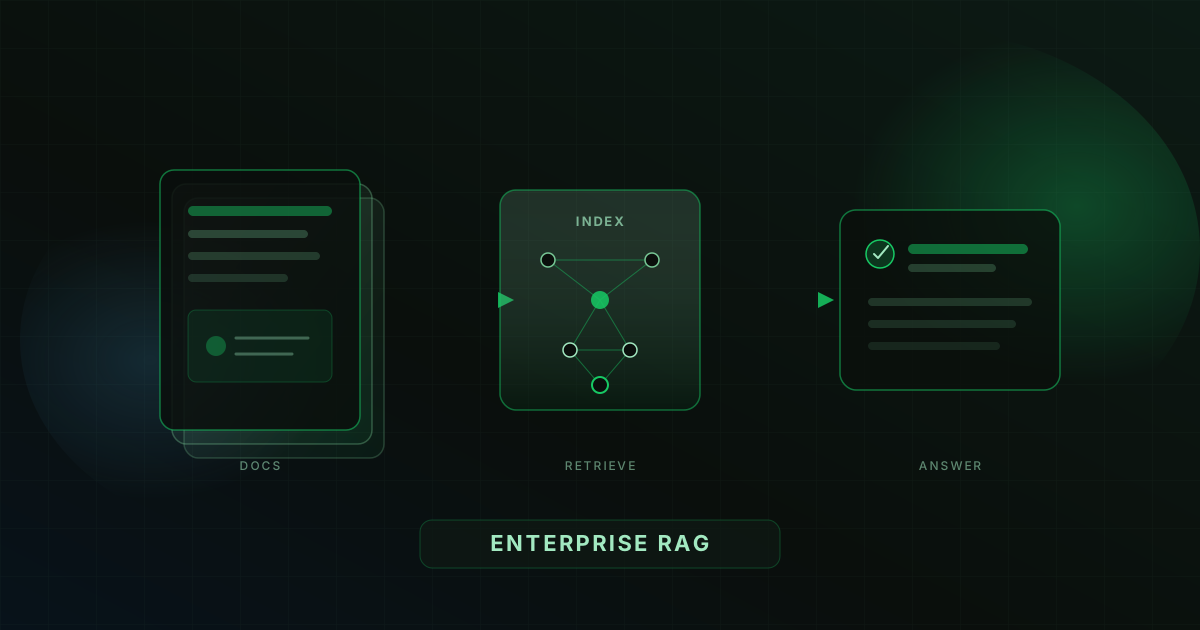
Enterprise RAG: 3 patterns that survive production
A RAG demo is easy. Production is won or lost on source governance: rights, versions, citations.
By Florian Gabon · July 30, 2026
Data and AI: the sovereign perimeter
Where data lives, how it is encrypted, who can reconstruct a request: the perimeter that makes enterprise AI credible.
By Florian Gabon · July 23, 2026
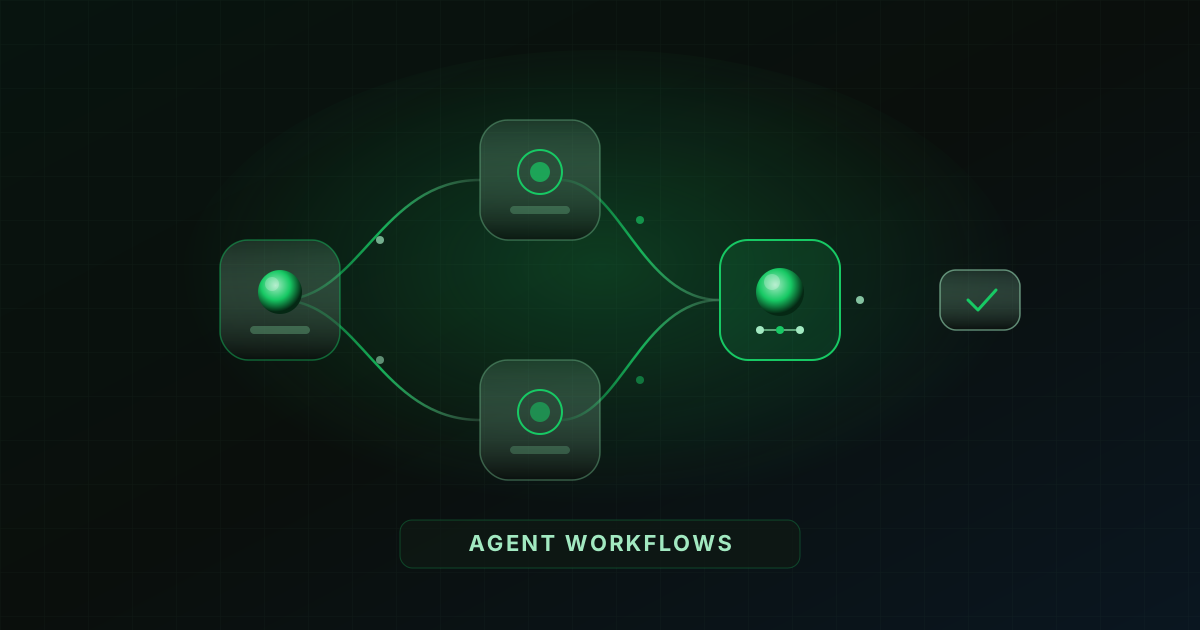
Enterprise AI agents: workflows that hold up
Production agents need business tools, guardrails, and human checkpoints. A clever prompt is not a workflow.
By Florian Gabon · July 16, 2026