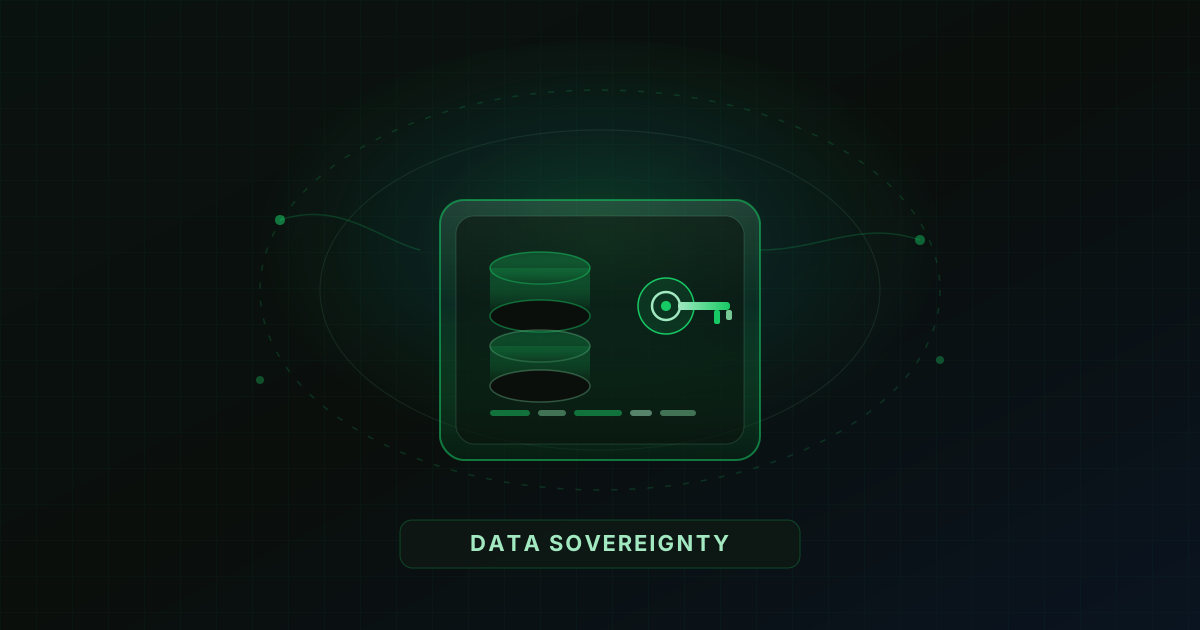
Data and AI: the sovereign perimeter
Where data lives, how it is encrypted, who can reconstruct a request: the perimeter that makes enterprise AI credible.
Three questions before every deployment
Before you open a connector or pick a model, three questions cut through most of the risk:
- Where are embeddings, context caches, logs, and their backups stored?
- Who can read prompts, responses, and artifacts injected into context (including platform teams and subprocessors)?
- How do you export those traces for an internal audit, accreditation, or access request?
If any answer is fuzzy, the deployment is not ready, even if the chat demo looks sharp. Data sovereignty is not a business blocker. It is the framework that keeps you from rebuilding trust on every project, and that lets IT and compliance say yes faster.
In organizations running AI in production, these questions become an entry checklist for every initiative, alongside token budgets and model choice. Without it, you discover too late that an out-of-zone cache or an overly verbose log pushed data outside the contractual perimeter.
Data residency
Models and indexes in your sovereign cloud or on-prem: no implicit transit to unapproved regions.
Residency, encryption, audit: the triad
Residency. Embeddings are derived data: they often inherit the same sensitivity as source documents. Storing them outside the approved zone “because they are just vectors” will not survive a CISO review or an accreditation dossier. Explicitly fix regions and operators for models, vector indexes, log retention, and backup copies, consistent with the GDPR accountability principle. Also document temporary transit cases (replication, restore, vendor support).
Encryption. Keys in your KMS (or HSM), secrets out of Git, encryption at rest for the index and in transit on every hop. That is the baseline expected by frameworks such as NIST SP 800-57 for key management. Check backups, snapshots, and staging environments: an unencrypted dump or a prod clone “for testing” undoes the rest of the design. Plan key rotation and how the platform behaves during it.
Audit. Who asked what, on which sources, with which answer, which tools were called. Exportable, timestamped, tamper-evident. Without usable logs, accreditation and N2 support stay theoretical. Define retention, who may export, and a format usable in post-mortems. French organizations work to the same discipline with the CNIL and security authorities such as ANSSI.
One entry point
A single AI gateway: policies, token budgets, and centralized logs, instead of a scatter of SaaS endpoints.
Network perimeter and failure modes
A sovereign perimeter also means egress control: which domains the cluster may reach, which external models (if any) transit through the gateway, how to block an “accidental” upload out of zone. Common incidents are not Hollywood breaches, they are overly permissive defaults, service accounts shared across agents, logs left for 90 days in a too-open bucket, or a preprod environment wired to real data without the same guardrails.
In production, document degraded mode: embedding store unavailable, log collector down, region failover (if allowed), KMS unavailable. The goal is not zero incidents, it is knowing where the data is during the incident, and being able to prove it afterward.
On the governance side, also align prompt retention with your personal-data policy and sector obligations. A log that helps audit can become a risk if it keeps sensitive content indefinitely without access control. The same applies to conversation exports shared with vendors during incidents: define what leaves the perimeter, under which ticket, and for how long.
Before go-live, walk a tabletop exercise with IT, security, and a business owner: simulate a missing citation, a connector outage, and an access request on a past conversation. If the team cannot answer from runbooks and logs alone, the perimeter is still incomplete.
Conclusion
Data sovereignty is not a blocker. It is the framework that lets business teams deploy faster with confidence. Residency, encryption, and audit form the foundation. RAG and agents plug in afterward without reopening the debate every sprint. For the strategic “why,” see Why sovereign AI matters; for retrieval that survives production, enterprise RAG patterns.
Keep reading
Why sovereign AI matters for enterprise
The chatbot is no longer the brief. Teams need a platform where data stays under their control.
By Florian Gabon · August 6, 2026
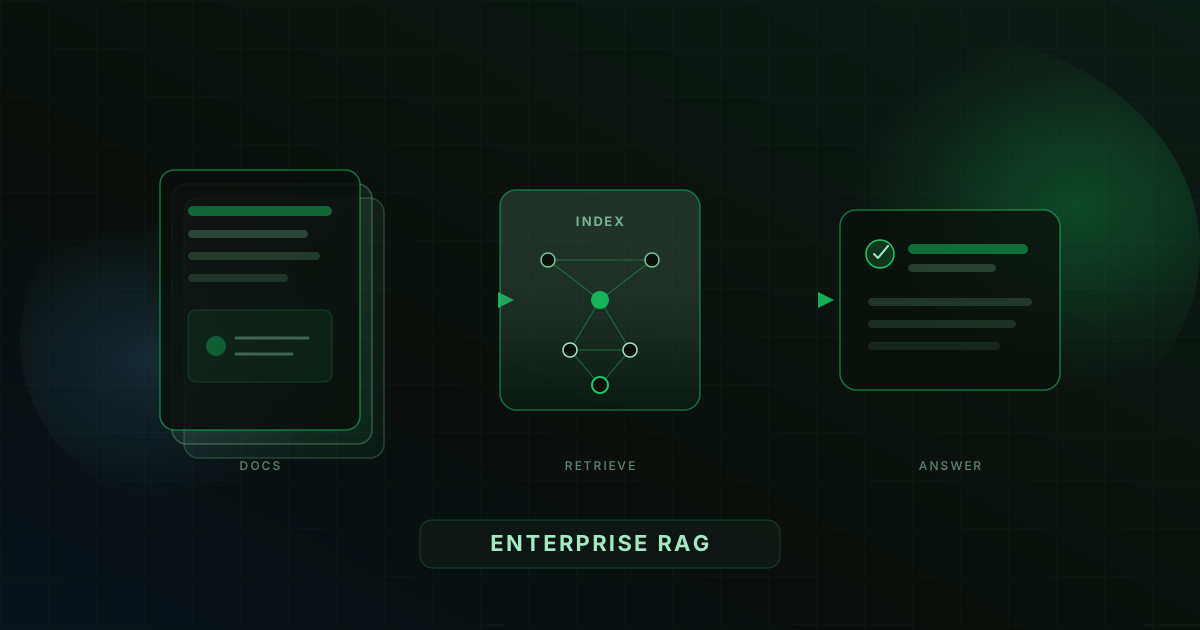
Enterprise RAG: 3 patterns that survive production
A RAG demo is easy. Production is won or lost on source governance: rights, versions, citations.
By Florian Gabon · July 30, 2026
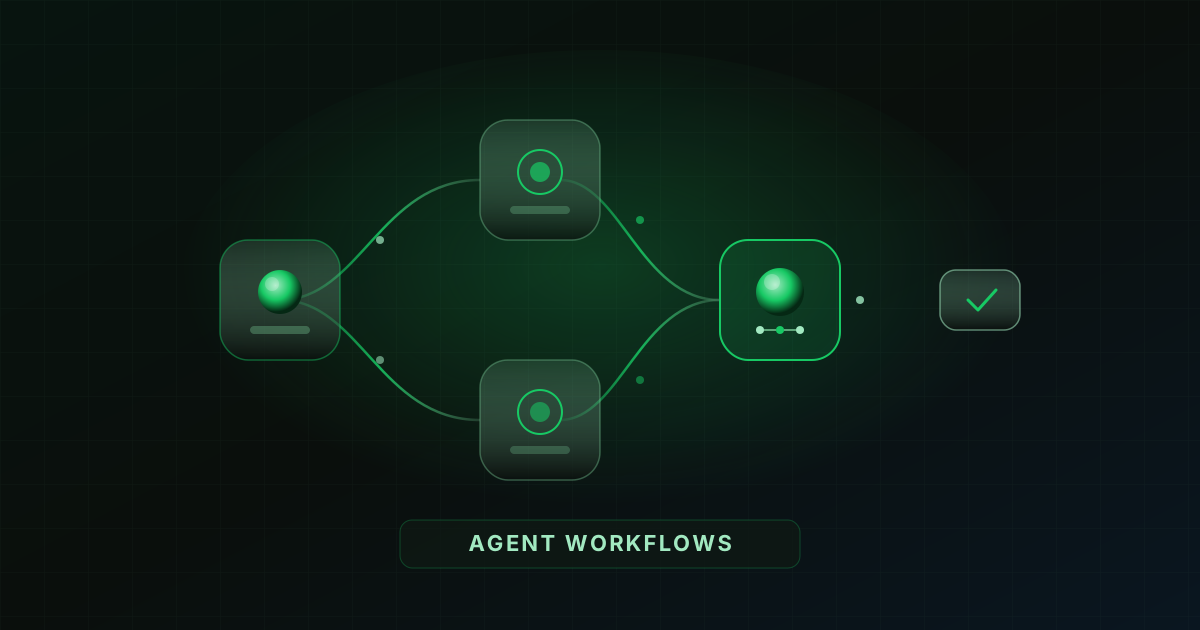
Enterprise AI agents: workflows that hold up
Production agents need business tools, guardrails, and human checkpoints. A clever prompt is not a workflow.
By Florian Gabon · July 16, 2026