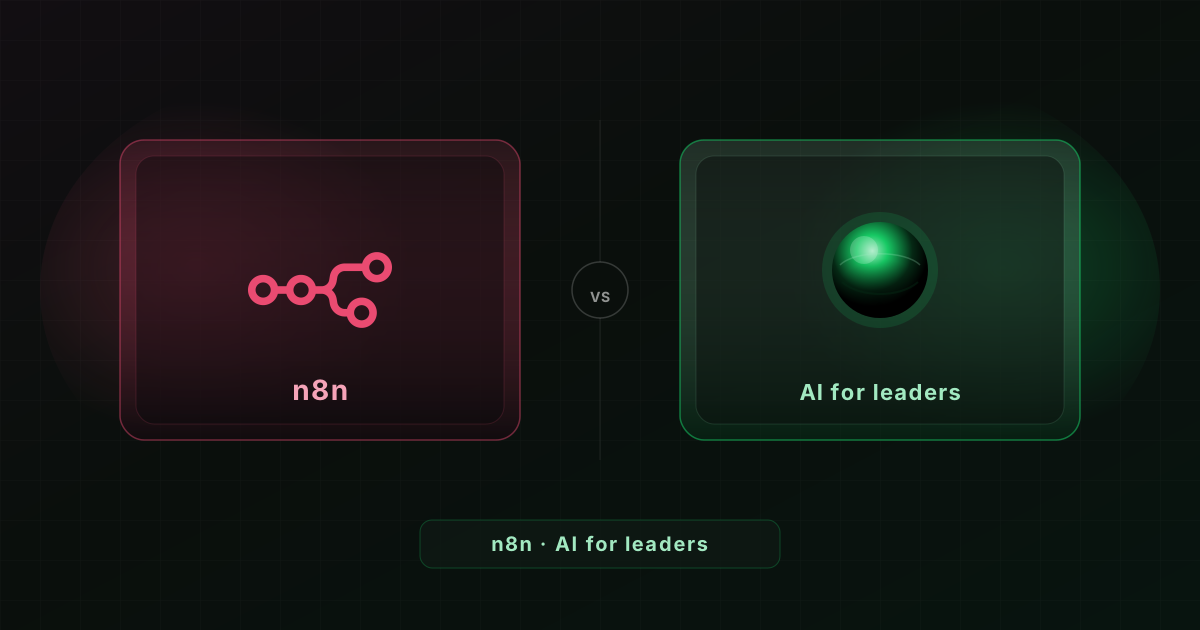
n8n vs AI for leaders: automation vs AI agents
Complementary tools. Not substitutes, once you need governed enterprise AI.
Two different jobs
n8n is built for deterministic work: webhooks, transforms, ops chains, light sync. See the n8n documentation for the workflow model. AI for leaders is built for enterprise AI agents: permissioned RAG, governance, a model gateway, and a business UI, inside a sovereign perimeter.
Treating them as substitutes slows projects down. You either force a workflow editor to carry AI governance (citations, policies, prompt audit), or you ask an agent platform to replace lightweight ETL. The outcome is familiar: unnecessary complexity, integration debt, and a team judging the tool on the wrong criteria.
The better reflex is to clarify the job, then compose. Many organizations do not need a single winner: they draw a sharp boundary between deterministic automation and the agentic layer.
Parse error on line 4:
...ecision -->|Yes| AI for leaders[AI for l
-----------------------^
Expecting 'SEMI', 'NEWLINE', 'EOF', 'AMP', 'START_LINK', 'LINK', 'LINK_ID', got 'NODE_STRING'
When n8n is the right tool
Choose n8n (or a similar orchestrator) when:
- the flow is predictable (if A then B) and does not depend on free-form natural-language understanding;
- the ops/IT team is comfortable with a workflow editor and explicit retries;
- you automate technical integrations without document citations or AI policies;
- success means “the job ran with the right payload,” not “the answer is grounded, cited, and auditable”;
- you need a fast glue layer between existing systems (ticketing, CRM, monitoring).
Self-hosted n8n already covers controlled deployment for automation. What it does not provide natively: ACL-aware RAG aligned with IAM, multi-step agents with an inspectable plan, a single UI for non-technical business users, centralized LLM budgets, and audit oriented to compliance (AI Act, GDPR, sector accreditation). You can wire LLM nodes. That is not the same as a platform designed to govern those interactions end to end.
Deterministic automation
APIs, webhooks, light ETL: n8n shines when the path is known and stable.
When AI for leaders is required
Reach for a sovereign AI platform when:
- users ask open questions over internal document bases and require sources;
- an agent must plan, call tools, and respect the end-user's IAM (not a single shared service account);
- you must prove who saw what, prompts, injected sources, actions, for audit or accreditation;
- several business lines share the same AI layer (support, HR, finance, legal) with common policies;
- multi-model cost and routing must be managed (budgets, fallback, smaller models for simple tasks).
In those cases, the challenge is no longer chaining nodes. It is deploying a governed, measurable AI experience inside your perimeter.
Governed agentic layer
RAG, agents, multi-model gateway, and audit: the perimeter automation alone does not cover.
Fast decision criteria
| Need | n8n-leaning | AI for leaders-leaning |
|---|---|---|
| Workload type | Jobs, sync, alerts | Q&A, agents, synthesis |
| End user | Ops / IT | Business + IT |
| Governance | Workflow logs | AI audit, policies, approvals |
| Knowledge | API payloads | Document corpus + ACL |
| Success | Job OK / KO | Grounded answer + scoped action |
If your roadmap mixes both columns, do not pick “one tool for everything.” Define what stays deterministic (sync, notifications, transforms) versus what becomes agentic (understanding, retrieval, policy-bound actions), then the contracts: events, APIs, optionally MCP to expose n8n as a tool behind a AI for leaders agent.
A useful stress test in steering committees: pick one candidate use case and ask whether success is a reliable batch job or a grounded, permissioned conversation that may trigger actions. If the room splits, you likely need both layers, with clear ownership, rather than forcing a single product to cover both jobs poorly.
Conclusion
n8n and AI for leaders do not compete on the same field. One runs deterministic automation; the other runs governed generative AI. Clarify the job, measure the need for audit and RAG, then compose.
Keep reading
Why sovereign AI matters for enterprise
The chatbot is no longer the brief. Teams need a platform where data stays under their control.
By Florian Gabon · August 6, 2026
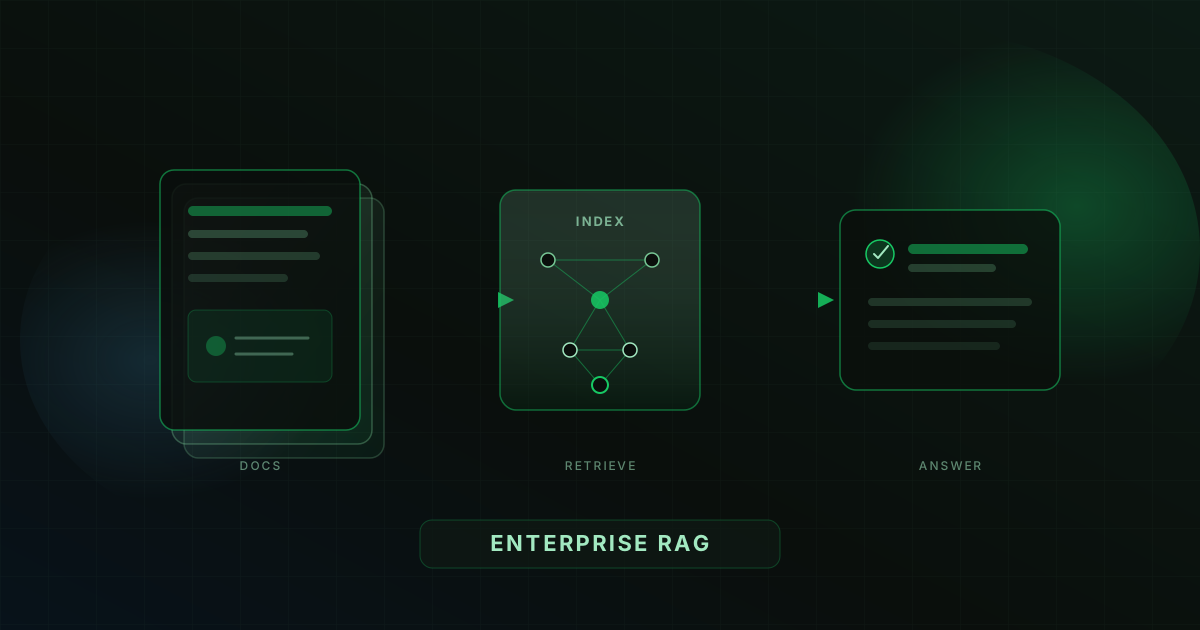
Enterprise RAG: 3 patterns that survive production
A RAG demo is easy. Production is won or lost on source governance: rights, versions, citations.
By Florian Gabon · July 30, 2026
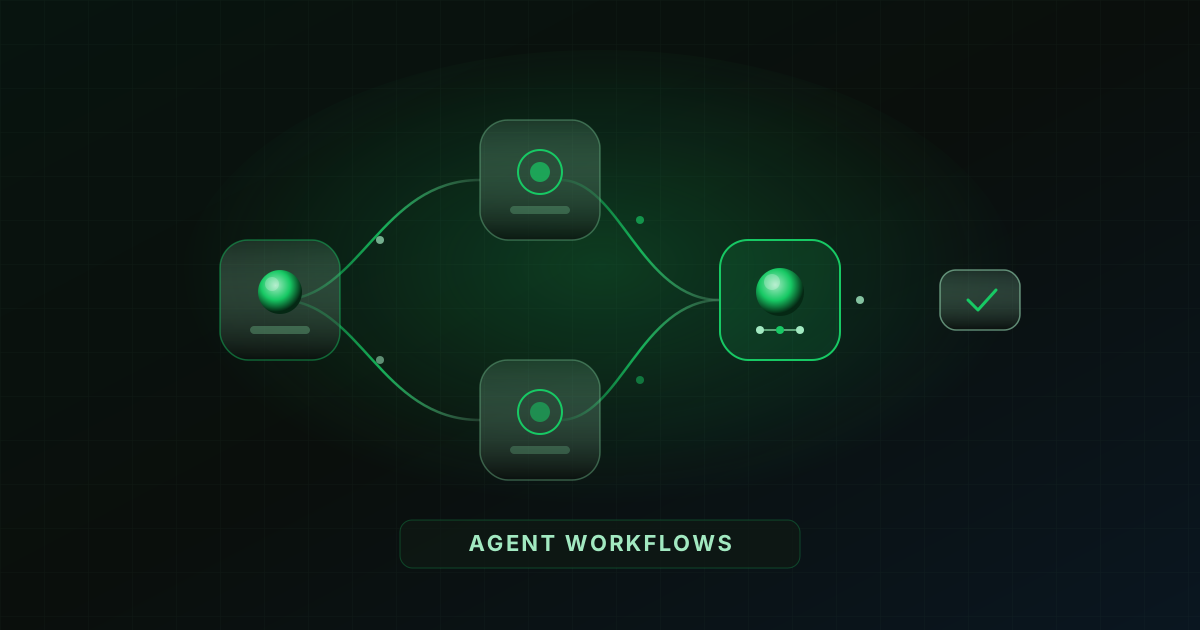
Enterprise AI agents: workflows that hold up
Production agents need business tools, guardrails, and human checkpoints. A clever prompt is not a workflow.
By Florian Gabon · July 16, 2026